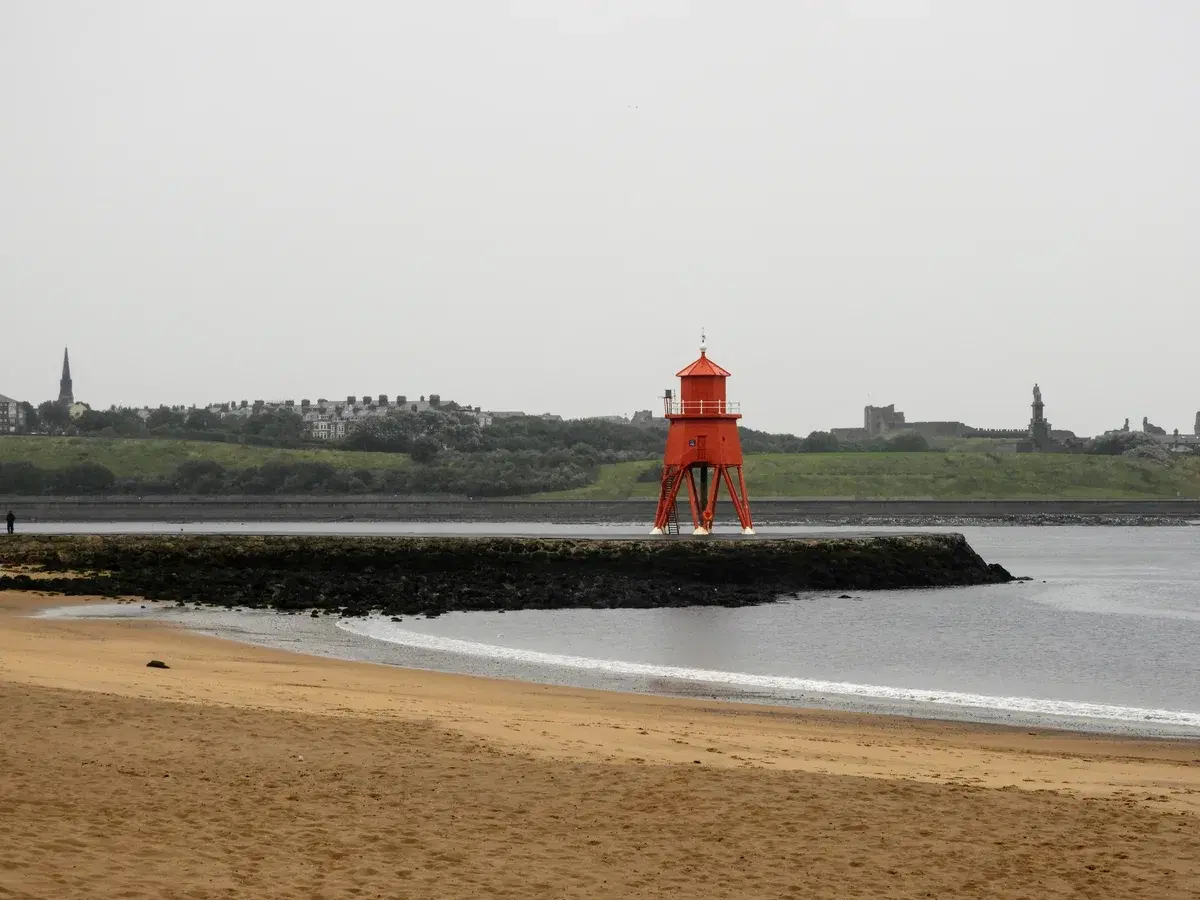
Catherine Cookson Trail in South Shields
Dame Catherine Cookson was born in South Shields and set her novels in the streets around Tyne Dock. Here is your guide to the places that shaped her life and her writing.
Dame Catherine Cookson was born at 5 Leam Lane in Tyne Dock, South Shields, on 20 June 1906. She went on to become one of the most widely read novelists in the English language, with over 100 books to her name and estimated sales of more than 123 million copies worldwide. Her novels, gritty, compassionate, and rooted in the working-class North East, drew directly on her upbringing in the poverty-stricken streets around the docks.
For decades, South Tyneside promoted a "Catherine Cookson Country" tourist trail that doubled the number of visitors to the area. While the formal trail is no longer actively marketed, the places that shaped Cookson's life and work are still here, and they still tell a powerful story. Here is your guide.
5 Leam Lane, Tyne Dock
Catherine Ann Davies was born in a two-roomed terrace at 5 Leam Lane, next to the docks and the five Tyne Dock arches. She was illegitimate, raised by her grandparents and her mother, Kate, whom she believed for years to be her older sister. The poverty, the shame, and the fierce pride of this upbringing would fuel virtually everything she wrote.
The house at 5 Leam Lane no longer stands, but the Tyne Dock area remains recognisable as the landscape of her childhood. The railway arches, the terraced streets running down to the river, and the views across the Tyne are all still there.
Best for: Catherine Cookson was born at 5 Leam Lane, Tyne Dock, on 20 June 1906. The house is gone, but the Tyne Dock arches and the surrounding streets remain.
The Fifteen Streets
The area known as "The Fifteen Streets", the grid of terraced streets between the docks and the river at East Jarrow, became the setting for Cookson's most famous novel, The Fifteen Streets (1952), and for several others including Kate Hannigan (1950), her first published work. The streets were demolished in slum clearances, but the geography is still traceable.
The Fifteen Streets was adapted as a television film in 1989, starring Sean Bean and Owen Teale, and was nominated for an Emmy Award. St Bede's church in the novel is generally identified as St Paul's church, Jarrow, a short distance from South Shields.
South Shields Museum and Art Gallery
South Shields Museum and Art Gallery on Ocean Road has a permanent Catherine Cookson display featuring memorabilia from her life, photographs, personal items, and material relating to her novels. It is the best single place in South Shields to understand her story and see how the real places of the town map onto the fictional ones.
The museum also has wider displays on South Shields' maritime heritage, industrial history, and multicultural community, all of which provide context for Cookson's world. Admission is free.
Best for: The Catherine Cookson display at South Shields Museum and Art Gallery on Ocean Road is free to visit and features photographs, personal items, and memorabilia.
Harton Workhouse (now South Tyneside District Hospital)
In 1924, at the age of eighteen, Catherine took a laundry job at Harton Workhouse, an experience that left a deep impression on her and informed several of her novels. She worked there until 1929 before leaving South Shields for Hastings.
The workhouse site is now occupied by South Tyneside District Hospital. In March 2008, the Dame Catherine Cookson Memorial Garden was unveiled in the hospital grounds. The garden uses a serpentine symbol, associated with health and caring, and is a quiet, reflective space.
The Word
The Word on Market Place, the National Centre for the Written Word, holds material related to Catherine Cookson in its collections and is a fitting place to visit on any literary trail through South Shields. The building itself, a striking modern library with interactive digital exhibits, a fabrication lab, and a rooftop terrace, represents the kind of investment in culture and learning that Cookson championed through her charitable giving. She donated millions to North East causes, including libraries, hospitals, and universities.
The River Tyne and Mill Dam
The River Tyne runs through Cookson's novels as it runs through South Shields itself. Mill Dam, the historic quayside area where The Customs House now stands, features in her descriptions of dock life, shipping, and the working waterfront. Walking along the river from the ferry landing past The Customs House and down towards Tyne Dock gives you a sense of the geography that shaped her stories.
Arbeia Roman Fort sits on the Lawe Top above Mill Dam, and while it predates Cookson by nearly two thousand years, she would have known the headland and the views across the river mouth.
Key Novels Set in South Shields
| Novel | Year | Setting |
|---|---|---|
| Kate Hannigan | 1950 | The Fifteen Streets, Tyne Dock |
| The Fifteen Streets | 1952 | East Jarrow / Tyne Dock |
| Colour Blind | 1953 | South Shields docks |
| Our Kate | 1969 | Autobiography, Leam Lane, Tyne Dock |
| The Gambling Man | 1975 | South Shields and the Tyne |
| The Cinder Path | 1978 | South Shields and County Durham |
Planning Your Visit
A self-guided Catherine Cookson walk through South Shields might follow this route:
- Start at South Shields Museum on Ocean Road. See the permanent Cookson display
- Walk to Tyne Dock via Laygate, pass through the streets of her childhood
- Visit the Tyne Dock arches, the landmark of Leam Lane
- Head to The Word on Market Place, explore the literary collections
- Finish at Mill Dam, visit The Customs House and walk along the river
The walk covers roughly 3 miles and takes around 2 hours at a leisurely pace, allowing time to stop at the museum and The Word. For a broader itinerary, see our guide to a weekend in South Shields or things to do in South Shields.
Best for: A self-guided Catherine Cookson walk from South Shields Museum through Tyne Dock to Mill Dam covers around 3 miles and takes approximately 2 hours.
Never miss what’s on
Join the weekly South Shields.org digest — the best events, news and local tips, straight to your inbox. Free, one email a week.
What's On
An Afternoon with Ann Cleeves
1:00 PM - 2:00 PM · The Word, National Centre for the Written Word, Market Place, South Shields, NE33 1JF
Shipwrecks and Smugglers Family Trail at Souter Lighthouse
11:00 AM - 4:00 PM · Souter Lighthouse and The Leas, Coast Road, Whitburn, Tyne & Wear, SR6 7NH
South Shields Market
9:00 AM - 3:00 PM · Market Place, South Shields, NE33 1JF