History of South Shields
From the Roman garrison at Arbeia to the Yemeni seafarers of the twentieth century, the history of South Shields is a story of trade, migration, and resilience at the mouth of the Tyne.
South Shields has been shaped by the river and the sea for nearly two thousand years. Its history stretches from a Roman supply fort guarding Hadrian's Wall to a Victorian coal port, a multicultural shipping town, and the modern seaside destination it is today. This is the story of South Shields, told through its key eras and the places that still bear witness to them.
The Roman Era: Arbeia
The history of South Shields begins on the Lawe Top, the headland overlooking the mouth of the River Tyne. In around AD 129, the Romans built a fort here called Arbeia, positioned to guard the main sea route supplying Hadrian's Wall. The fort began as a small cavalry garrison, but by the early third century it had been expanded into a massive granary complex, the principal supply base for the entire Wall frontier.
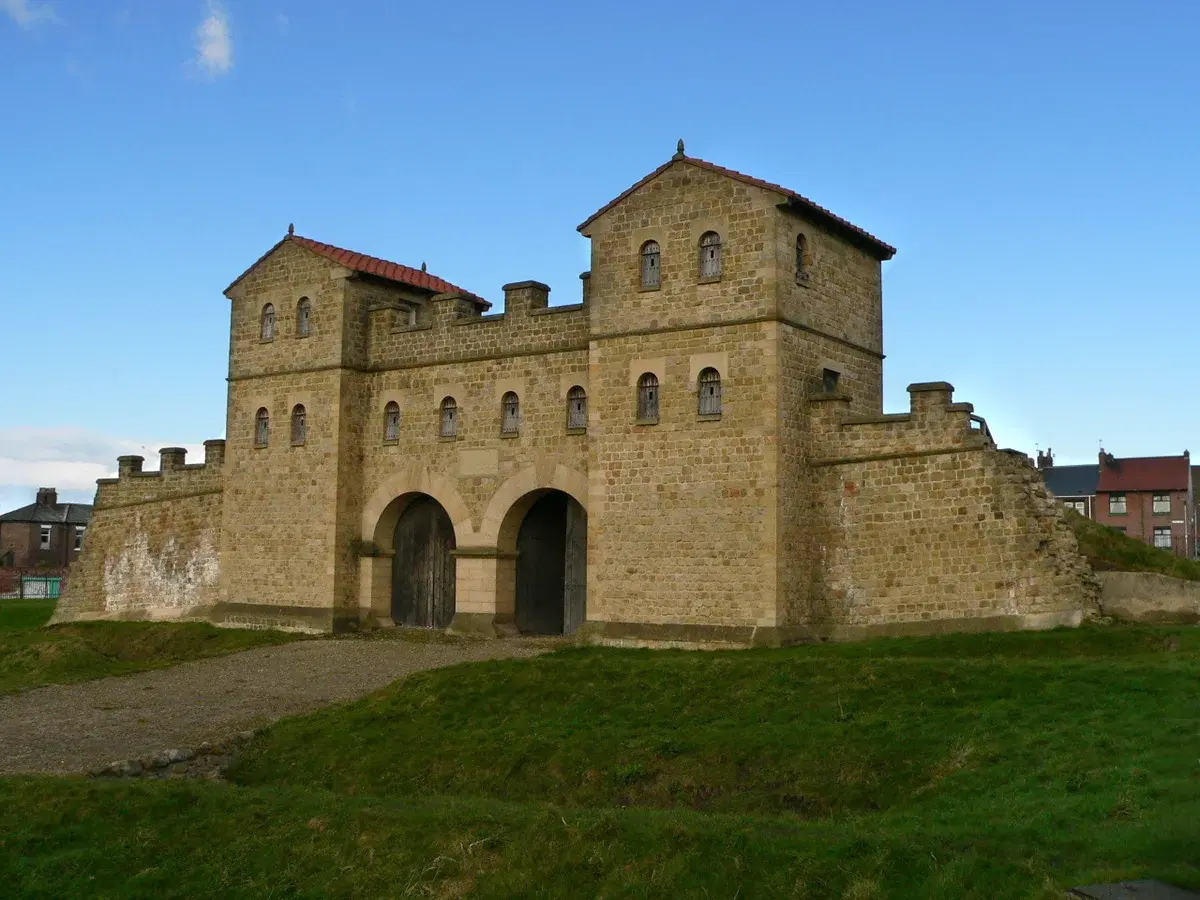
Arbeia Roman Fort is now a free museum with full-scale reconstructions of a Roman gatehouse, barracks, and commanding officer's house. Among its most significant finds is the tombstone of Regina, a freed British slave who married Barates, a merchant from Palmyra in modern-day Syria, a reminder that South Shields has been a meeting point of cultures since antiquity.
The name Arbeia itself may derive from an Aramaic word meaning "place of the Arabs," possibly referring to a unit of Tigris Boatmen (numerus barcariorum Tigrisiensium) from modern-day Iraq who were stationed at the fort in the fourth century and are thought to have been its last Roman occupants.
Best for: Arbeia Roman Fort is free to visit from late March to September. The tombstone of Regina, one of the most important Roman finds in Britain, is on display in the museum.
The Medieval and Tudor Period
After the Romans withdrew in the early fifth century, the site passed through Anglo-Saxon and then Norman hands. The Venerable Bede, writing in the eighth century, referred to the area as "at the mouth of the River Tyne." A small fishing and salt-panning community grew around the river mouth through the medieval period.
By the early 1600s, coal had become the dominant industry. South Shields sat at the point where coal from the Durham coalfield was loaded onto ships for transport to London and beyond. This coal trade would define the town for the next three centuries.
The Industrial Boom
The nineteenth century transformed South Shields from a modest riverside settlement into a thriving industrial town. Coal mining, alkali production, glassmaking, and shipbuilding drove a population explosion, from around 12,000 in 1801 to 75,000 by the 1860s. Workers flooded in from Ireland, Scotland, and across northern England.
Shipbuilding began in South Shields in 1720 when Robert Wallis established a yard in Pilot Street. By the Victorian era, the town's yards were producing vessels for a global market. The lifeboat was a South Shields invention, William Wouldhave and Henry Greathead developed competing designs here in the 1780s, and the first purpose-built lifeboat, the Original, launched from the Lawe Top in 1790.
Mill Dam, the historic quayside area where The Customs House now stands, was the commercial heart of the town. South Shields received its own customs jurisdiction, free from Newcastle, in 1848, and the Customs House itself was constructed in 1864.
Best for: South Shields claims to be the birthplace of the lifeboat. The Original, designed in 1789, launched from the Lawe Top in 1790 and saved hundreds of lives in its thirty years of service.
The Arab and Yemeni Community
One of the most distinctive chapters in South Shields' history is the arrival of Yemeni seafarers in the late nineteenth and early twentieth centuries. Seamen from the British-ruled Aden Protectorate began working on British merchant ships from the 1890s, and many settled around the docks at Holborn and Mill Dam.
During the First World War, the British government actively encouraged Yemeni men to crew merchant navy supply ships. By the end of the war, the Yemeni population of South Shields had risen to around 3,000, though as many as 800 Yemeni sailors lost their lives at sea during the conflict. This made South Shields home to one of the earliest and most established Arab communities in Britain.
In the 1930s, Sheikh Abdullah Ali Al-Hakimi established the Zaoia Allaouia Islamic Mosque on Cuthbert Street by converting a former pub, the Hilda Arms. The Al-Azhar Mosque, built in 1971 on Laygate, was one of the first purpose-built mosques in the country, funded partly by the local Yemeni community and partly by donations from across the Middle East and Africa.
The community's story is told in the exhibition "The Last of the Dictionary Men," which documents how Yemeni sailors used English-Arabic dictionaries to navigate life in a new country. You can learn more at South Shields Museum and Art Gallery, which has permanent displays on the town's multicultural heritage.
Catherine Cookson's South Shields
Dame Catherine Cookson, born at 5 Leam Lane in Tyne Dock in 1906, became one of the most widely read English novelists of the twentieth century. Her novels, including The Fifteen Streets, Kate Hannigan, and Colour Blind, drew directly on her upbringing in the poverty-stricken streets around the docks. For decades, South Tyneside promoted a "Catherine Cookson Country" tourist trail, and you can still visit many of the locations that inspired her work. The South Shields Museum and Art Gallery has a permanent Catherine Cookson display, and The Word holds related material in its collections. Read our full guide to the Catherine Cookson Trail in South Shields.
The Twentieth Century and Beyond
The decline of coal and shipbuilding through the twentieth century hit South Shields hard, as it did most of the industrial North East. The last mine in the area closed in the 1990s. But the town has reinvented itself around its natural assets, the beaches, the coastal walks, the river, and its cultural infrastructure.
The Customs House opened in 1994 as an arts venue in the restored listed building at Mill Dam, giving the town a 440-seat theatre, cinema, and gallery. The Word, the National Centre for the Written Word, opened on Market Place in 2016 and is one of the most striking modern libraries in the country. Arbeia Roman Fort gained UNESCO World Heritage Site status as part of the Frontiers of the Roman Empire inscription.
Ocean Road, once a Victorian promenade, is now famous for its Indian and Bangladeshi restaurants, a legacy of the South Asian communities who settled alongside the earlier Yemeni population. The seafront at Sandhaven and Littlehaven draws visitors year-round, and the town retains a strong sense of identity.
Best for: South Shields is one of only a handful of English towns where you can visit a UNESCO World Heritage Site, swim in the sea, and eat world-class curry all in the same afternoon.
Key dates in South Shields history
- c. AD 129, Romans build Arbeia fort on the Lawe Top
- c. AD 370, Tigris Boatmen stationed at Arbeia
- 1600s, Coal trade begins to dominate the local economy
- 1720, First shipyard opens in Pilot Street
- 1790, the Original, the first purpose-built lifeboat, launches from the Lawe Top
- 1848, South Shields granted its own customs jurisdiction
- 1864, the Customs House built at Mill Dam
- 1890s, Yemeni seafarers begin settling in South Shields
- 1906, Catherine Cookson born at 5 Leam Lane, Tyne Dock
- 1930s, First mosque established on Cuthbert Street
- 1971, Al-Azhar Mosque built on Laygate
- 1994, the Customs House opens as an arts venue
- 2016, the Word opens on Market Place
Never miss what’s on
Join the weekly South Shields.org digest — the best events, news and local tips, straight to your inbox. Free, one email a week.
What's On
An Afternoon with Ann Cleeves
1:00 PM - 2:00 PM · The Word, National Centre for the Written Word, Market Place, South Shields, NE33 1JF
Shipwrecks and Smugglers Family Trail at Souter Lighthouse
11:00 AM - 4:00 PM · Souter Lighthouse and The Leas, Coast Road, Whitburn, Tyne & Wear, SR6 7NH
South Shields Market
9:00 AM - 3:00 PM · Market Place, South Shields, NE33 1JF