The Arab Quarter: Ocean Road's Multicultural Heritage
How Yemeni seafarers settled in South Shields from the 1890s, built one of the UK's first purpose-built mosques, created Ocean Road's famous food scene, and shaped the town's unique multicultural identity.
South Shields has one of the most distinctive multicultural histories of any town in England. While most people know Ocean Road for its curry houses and Colmans fish and chips, the story behind the street runs far deeper. Yemeni seafarers began settling here in the 1890s, making South Shields home to the oldest established Arab community in Britain. The Bangladeshi community followed in the mid-twentieth century, and together they transformed a Victorian seaside road into one of the most celebrated food streets in the North East.
This is the story of how that happened.
The First Arrivals: Yemeni Seafarers in the 1890s
The port of Aden, at the southern tip of the Arabian Peninsula, was under British control from 1839. Young Yemeni men were recruited to work on British merchant ships, particularly in the engine rooms -- hot, dangerous, poorly paid work that fuelled the commerce of the British Empire. When these ships docked at ports like South Shields, some of the men stayed.
The first recorded Yemeni boarding house in South Shields was opened by Ali Said in 1894, in the Holborn area near Laygate. By 1900, South Shields had 76 seamen's boarding houses along the riverside at Holborn, Mill Dam, and the Market area, and several of these were run by Yemeni families. The men who settled here were among the very first Muslims to make Britain their permanent home.
Best for: South Shields is home to the oldest settled Arab community in Britain. Yemeni seafarers began arriving in the 1890s, making the town a pioneer of Muslim settlement in the UK.
The Boarding Houses and Early Community
By the 1920s, the Yemeni community in South Shields had grown to between 300 and 600 permanent residents, with 12 Arab-run boarding houses and a growing number of Yemeni cafes. These boarding houses were not just places to sleep -- they were community hubs where news from home was shared, letters were written, and new arrivals were helped to find their feet.
The boarding houses clustered around Holborn, East Holborn, and the streets near the river. The men who ran them acted as unofficial community leaders, negotiating with shipping companies on behalf of seamen looking for work and managing the complex web of obligations that connected South Shields to villages in Yemen.
During the First World War, the Yemeni population surged as demand for merchant seamen soared. By the end of the war, there were over 3,000 Yemeni residents in South Shields. Many had served on ships supplying the war effort, and some 800 Yemeni men from South Shields fought and died alongside the British in the Second World War.
The 1919 Disturbances
The end of the First World War brought tensions. Demobilised soldiers returned to find jobs scarce, and competition for work on the docks and ships became fierce. On 4 February 1919, violence broke out at Mill Dam, with hundreds clashing in what became known as the South Shields race riots -- part of a wider wave of port disturbances across Britain that year.
Eight Arab men were arrested and imprisoned; no white men were charged. The episode was a painful chapter, but the Yemeni community endured. They had built lives, businesses, and families in South Shields, and they were not leaving.
The Zaoias and the Path to Al-Azhar Mosque
Before there was a mosque in South Shields, there were zaoias -- the Arabic word for "corner." These were converted houses or rooms set aside for prayer, and they served as the first places of Muslim worship in Britain. The earliest zaoia was on Cuthbert Street, but when that area was redeveloped, the council offered a temporary site on Laygate.
The community wanted something permanent. A first attempt at a purpose-built mosque began on a site behind Commercial Road, where foundations, a roof, and part of a wall were constructed before funds ran out. A Saudi architect then helped develop plans for a new mosque on Laygate Lane, and construction began again. With half the mosque built using money raised locally, the community secured additional support to complete the project.
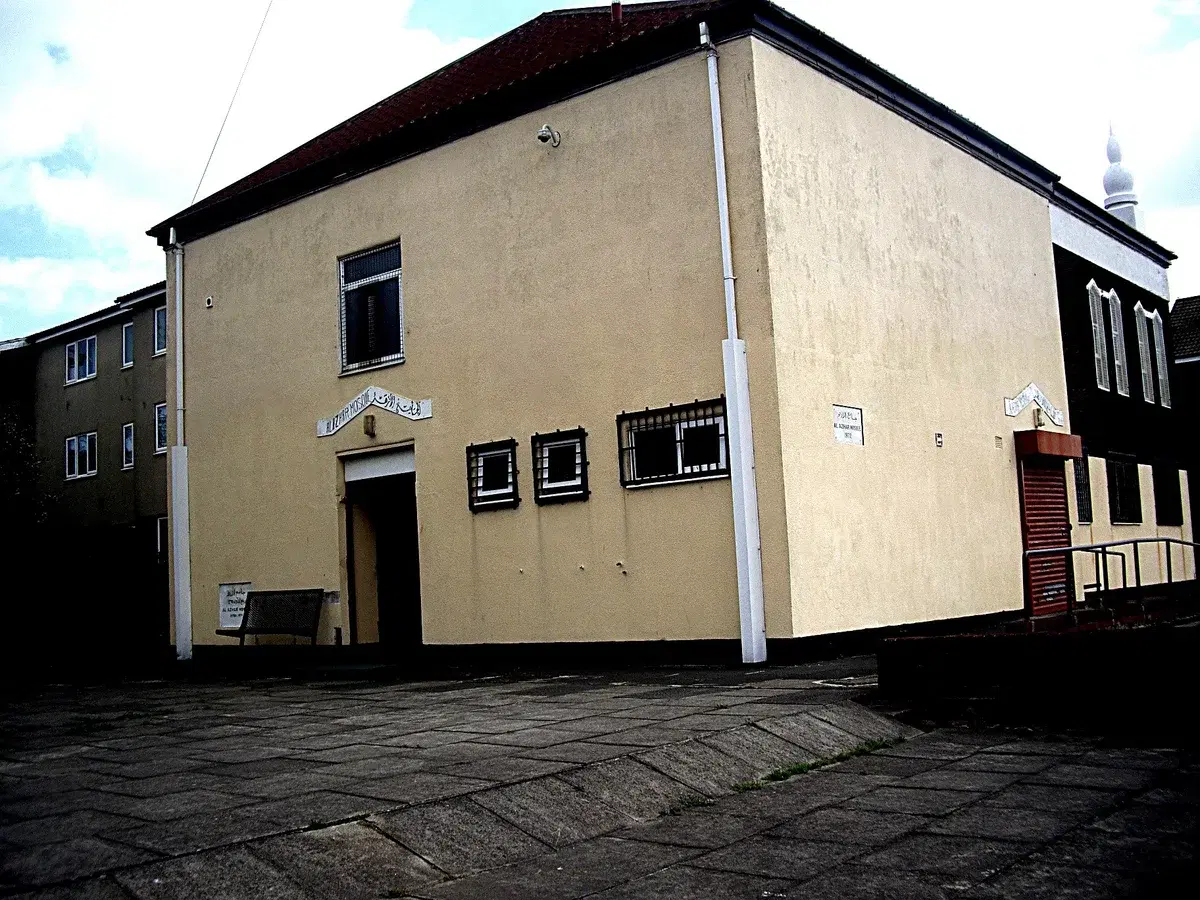
Al-Azhar Mosque opened in 1971 -- one of the first purpose-built mosques in the United Kingdom. It stands on Laygate to this day, serving the Yemeni community and welcoming visitors, school groups, and interfaith events.
Best for: Al-Azhar Mosque, opened in 1971 on Laygate, was one of the UK's first purpose-built mosques. It was built by the Yemeni community using locally raised funds and remains a working mosque today.
Muhammad Ali Comes to South Shields
The most famous day in the mosque's history came on a summer afternoon in 1977. Johnny Walker, a painter and decorator from South Tyneside who had once been a boxer himself, invited world heavyweight champion Muhammad Ali to visit South Shields. Ali made the trip from Newcastle in an open-top bus, drawing enormous crowds through the streets.
Ali and his wife Veronica Porsche had their recent marriage blessed at Al-Azhar Mosque. Approximately 7,000 people gathered outside, with 300 guests inside for the ceremony. The visit put Al-Azhar Mosque and South Shields' Yemeni community on the national map, and photographs from the day are still displayed in the mosque.
The Bangladeshi Community and the Rise of Ocean Road
While the Yemeni community established itself around Holborn and Laygate, a separate but connected story was unfolding on Ocean Road. Bangladeshi merchant seamen -- many from the Sylhet region -- began settling in South Shields from the mid-twentieth century, following a similar pattern to the Yemeni pioneers before them.
As jobs on ships and in factories declined in the 1970s and 1980s, Bangladeshi men turned to the fast-growing Indian restaurant business. The first Indian restaurant on Ocean Road is thought to have opened around 1958, and by the 1970s a cluster of South Asian restaurants had formed on the street. Today, there are more than a dozen Indian and Bangladeshi restaurants on and around Ocean Road, earning it the nickname "the curry mile."
The Bangladeshi community is now the third largest in Tyne and Wear, and their restaurants are the backbone of Ocean Road's famous food scene. Establishments like Cafe India, Spice Garden, Zeera Indian Cuisine, Radhuni, and Curry Centre have won regional and national awards, drawing food lovers from across the North East.
Best for: Ocean Road's "curry mile" has been the centre of South Shields' Bangladeshi community for over sixty years. The concentration of award-winning restaurants here rivals cities many times the town's size.
Two Communities, One Town
The Yemeni and Bangladeshi communities in South Shields are distinct -- different languages, different regions of origin, different patterns of settlement. But they share a common thread: both were drawn here by the sea, both put down roots in the face of hardship, and both transformed the character of the town.
The Yemeni community is concentrated around Laygate, the mosque, and the Yemeni Community Association. The Bangladeshi community is centred on Ocean Road and its restaurants. Together, they give South Shields a multicultural identity that is genuinely unusual for a town of its size in the North East.
Visiting Today
The heritage of these communities is woven into the fabric of South Shields. Here is how to experience it:
- Al-Azhar Mosque on Laygate -- one of the UK's first purpose-built mosques. The mosque welcomes school visits and participates in interfaith events. Contact them in advance to arrange a visit.
- Ocean Road -- walk the length of the street and eat at one (or more) of the curry houses. Zeera for fine dining, Cafe India for generous portions, Spice Garden for award-winning balti.
- South Shields Museum and Art Gallery on Ocean Road -- the museum holds material relating to the Yemeni and Bangladeshi communities, including photographs and oral history recordings.
- The Word in the Market Place -- the National Centre for the Written Word has hosted exhibitions on South Shields' multicultural heritage.
Further Reading
The Yemeni Project (theyemeniproject.org) is the most comprehensive resource on the history of the Yemeni community in South Shields, with oral histories, photographs, and detailed research. The South Shields Local History Group also maintains an excellent page on Yemeni heritage.
For the story of Ocean Road's food scene in full, see our Ocean Road guide. For the broader sweep of the town's past, see our History of South Shields.
Local businesses mentioned
Al-Azhar Mosque
Laygate, South Shields, NE33 5RT
Cafe India
200 Ocean Road, South Shields, NE33 2JQ
Spice Garden
202 Ocean Road, South Shields, NE33 2JQ
Zeera Indian Cuisine
206-210 Ocean Road, South Shields, NE33 2JQ
Radhuni
166-170 Ocean Road, South Shields, NE33 2JQ
Curry Centre
154 Ocean Road, South Shields, NE33 2JF
South Shields Museum and Art Gallery
10 Ocean Road, South Shields, NE33 2JA
The Word
45 Market Place, South Shields, NE33 1DX
Never miss what’s on
Join the weekly South Shields.org digest — the best events, news and local tips, straight to your inbox. Free, one email a week.
What's On
An Afternoon with Ann Cleeves
1:00 PM - 2:00 PM · The Word, National Centre for the Written Word, Market Place, South Shields, NE33 1JF
Shipwrecks and Smugglers Family Trail at Souter Lighthouse
11:00 AM - 4:00 PM · Souter Lighthouse and The Leas, Coast Road, Whitburn, Tyne & Wear, SR6 7NH
South Shields Market
9:00 AM - 3:00 PM · Market Place, South Shields, NE33 1JF