Heritage Walking Trail: A Self-Guided Tour of South Shields
From the Roman fort at Arbeia to the Herd Groyne Lighthouse, a self-guided walking trail through nearly 2,000 years of history -- Romans, lifeboats, seafarers, and the mouth of the Tyne.
South Shields has nearly 2,000 years of recorded history. A Roman garrison guarded the mouth of the Tyne here; medieval fishermen worked the river; the lifeboat was invented on its shores; and waves of migration, from Yemeni seafarers to Bangladeshi restaurateurs, have given it a multicultural character unique in the North East.
This self-guided heritage walking trail takes you through eight key landmarks, from the highest point on the Lawe Top down to the seafront. Allow two to three hours at a comfortable pace, with time to explore each site.
1. Arbeia Roman Fort
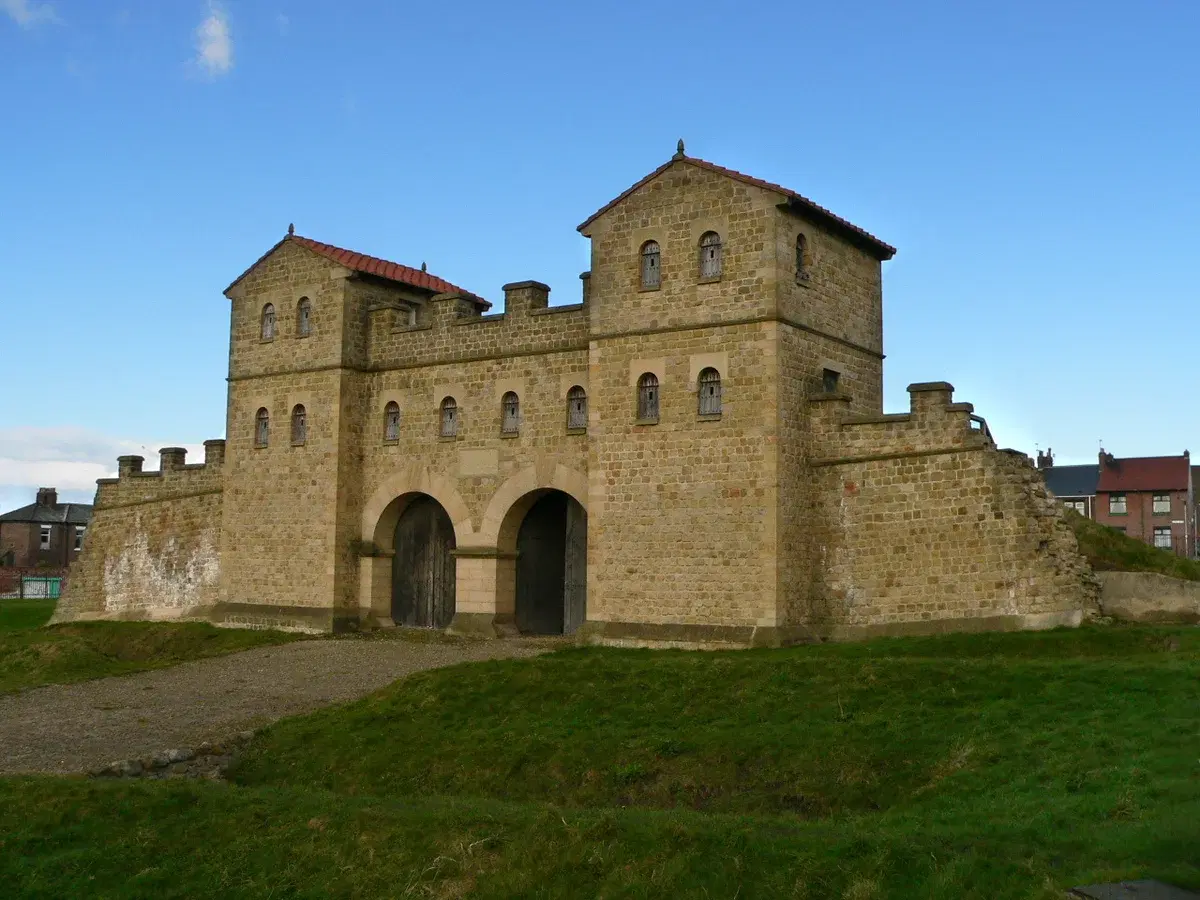
Begin at Arbeia Roman Fort on Baring Street, built around AD 129 to guard the main sea route supplying Hadrian's Wall. Arbeia is the only Roman fort in Britain with full-scale reconstructed buildings you can walk through, a gatehouse with rampart views, a commanding officer's house with painted frescoes, and a barrack block.
The fort's museum displays remarkable finds, including the famous Regina tombstone, a memorial to a freed British slave woman erected by her Syrian husband, Barates, in the 2nd century. It is one of the most moving and significant Roman artefacts in Britain, and it speaks directly to South Shields' long history of multicultural connections.
Admission is free. The fort is open from late March to the end of September.
For the full visitor guide, see our Arbeia Roman Fort guide.
Best for: The Regina tombstone at Arbeia is a memorial to a freed British slave woman, erected by her Syrian husband in the 2nd century -- a reminder that South Shields has been a multicultural place for nearly 2,000 years.
2. Lawe Top (Lifeboat Heritage)
From Arbeia, walk south along the headland to Lawe Top, the high ground overlooking the mouth of the Tyne. It was from here, in 1790, that The Original, the first purpose-built lifeboat, was launched after a devastating shipwreck the previous year had killed the entire crew of the Adventure in full view of helpless onlookers.
The competition to design a rescue boat produced rival submissions from William Wouldhave and Henry Greathead. The final design drew on both, and The Original saved hundreds of lives over its thirty years of service. South Shields' claim to be the birthplace of the lifeboat is commemorated in street names, monuments, and the town's identity.
The views from the Lawe Top across the river mouth to Tynemouth Priory are among the finest on the coast.
3. St Hilda's Church
A short walk south-west from the Lawe Top brings you to St Hilda's Church, which stands on the headland above the river. A church has occupied this site since the medieval period, and St Hilda's was the spiritual centre of the community for centuries.
The present building dates from the 19th century, but the churchyard contains older memorials. The location, high above the river with views across to North Shields, gives a strong sense of why this spot was chosen as the site of the town's first church.
4. Mill Dam and The Customs House
Descend from St Hilda's to Mill Dam, the historic heart of the town's maritime trade. The Customs House that stands here today was built in 1863 to serve the busy port, and it has been beautifully converted into South Tyneside's premier arts venue, housing a 440-seat theatre, a cinema, a gallery, a restaurant, and a bar.
The area around Mill Dam was the commercial centre of South Shields for centuries. The Shields Ferry landing is immediately adjacent, and the crossing between the two Shields has been in use since at least the 14th century.
For the full visitor guide, see our Customs House guide. The Shields Ferry guide covers the history of the river crossing.
Best for: The Customs House at Mill Dam was built in 1863 and is now South Tyneside's premier arts venue. The Shields Ferry landing is next door.
5. The Word
From Mill Dam, walk south to Market Place and The Word, the National Centre for the Written Word. Opened in 2016, this striking modern building replaced the old library and houses interactive digital exhibits, a fabrication lab, a performance space, and a rooftop terrace with views across the town.
The Word is completely free to visit and is one of the most impressive public library buildings in the country. Its location on Market Place connects it to the town's medieval trading history, markets have been held here for centuries.
6. Ocean Road
Continue south down Ocean Road, the famous street that links the town centre to the seafront. Ocean Road is known locally as the curry mile, home to more than a dozen Indian and Bangladeshi restaurants that reflect the town's multicultural heritage.
The story of Ocean Road is the story of South Shields' migrant communities. Yemeni seafarers settled in the Holborn area from the 1890s; Bangladeshi merchant seamen arrived from the mid-20th century and turned to the restaurant business as shipping jobs declined. The first Indian restaurant on Ocean Road is thought to have opened around 1958.
South Shields Museum and Art Gallery on Ocean Road has permanent displays on the town's maritime, industrial, and multicultural history, including a Catherine Cookson display.
For the full story, see our Arab Quarter heritage guide and Ocean Road food guide.
Best for: Ocean Road has been the centre of South Shields' multicultural food scene since around 1958. The Yemeni community dates back to the 1890s.
7. South Marine Park
At the bottom of Ocean Road, cross to South Marine Park, the Edwardian pleasure grounds that sit between the town and the sea. The park has a boating lake with pedalos and rowing boats, a miniature steam railway (the Lakeshore Railroad), two play parks, gardens, and a bandstand.
South Marine Park is a reminder of the Edwardian resort era, when South Shields marketed itself as a holiday destination for working families from the Durham coalfields and Tyneside. The park connects directly to the seafront promenade and to Bents Park, which hosts the popular free summer concerts.
8. Herd Groyne Lighthouse
End your walk at the Herd Groyne Lighthouse, standing at the very tip of the South Shields pier at the mouth of the Tyne. Built in 1882, the distinctive red and white lighthouse marks the southern entrance to the river and is one of the most photographed landmarks on the coast.
The groyne was built to protect the harbour entrance from silting, and the lighthouse guided ships safely into the Tyne during the great era of coal and shipping. Standing here at the river mouth, with the open sea ahead and the towers of Tynemouth Priory across the water, you are at the point where South Shields' entire history, Roman, medieval, industrial, and modern, comes together.
Best for: The Herd Groyne Lighthouse (1882) marks the mouth of the Tyne and is one of the most photographed landmarks on the North East coast.
Practical Information
- Distance: Approximately 2.5 miles (4 km) in total
- Time: 2 to 3 hours at a comfortable pace, depending on time spent at each site
- Terrain: Paved streets and paths throughout; some slopes between the Lawe Top and Mill Dam
- Parking: Free parking at St Hilda Street car park; pay-and-display on the seafront
- Public transport: South Shields Metro station is a 10-minute walk from Arbeia
- Refreshments: Cafes on Ocean Road and the seafront; The Steamboat at Mill Dam for real ale
- Accessibility: The route is mostly on paved surfaces, but includes slopes and some uneven sections around the Lawe Top
For the full history of South Shields, see our History of South Shields guide. For the Catherine Cookson story, follow our Catherine Cookson trail.
Local businesses mentioned
Never miss what’s on
Join the weekly South Shields.org digest — the best events, news and local tips, straight to your inbox. Free, one email a week.
What's On
An Afternoon with Ann Cleeves
1:00 PM - 2:00 PM · The Word, National Centre for the Written Word, Market Place, South Shields, NE33 1JF
Shipwrecks and Smugglers Family Trail at Souter Lighthouse
11:00 AM - 4:00 PM · Souter Lighthouse and The Leas, Coast Road, Whitburn, Tyne & Wear, SR6 7NH
South Shields Market
9:00 AM - 3:00 PM · Market Place, South Shields, NE33 1JF